


Izdelki za oskrbo rane


Kontaktne mrežice z mehkim silikonom Safetac
Mepitel
Vodilna obloga na svetu1 za oskrbo kroničnih in akutnih ran, uporabljena je bila za oskrbo več kot 100 milijonov primerov ran.
Mepitel je primarna obloga v obliki mrežice, obojestransko prevlečena s slojem mehkega silikona. Odprta struktura omogoča optimalen prenos izločka v sekundarno oblogo in preprosto izvedbo lokalnega zdravljenja. Obloga Mepitel lahko na rani ostane 14 dni3,15 in se ne izsuši, kar sicer lahko povzroči poškodbe in bolečine. Tako lahko skupaj z vsemi prednostimi, ki jih nudi tehnologija Safetac, resnično zagotovite nemoteno16-21 celjenje rane in stroškovno učinkovitost. Obloga Mepitel zaščiti rano in kožo v njeni okolici ter preprečuje poškodbe rane in novonastalega tkiva4-8,14 hkrati pa tudi vraščanje tkiva v mrežico. Poleg tega preprečuje izločku prehod na kožo v okolici in s tem zmanjšuje tveganje za nastanek maceracije. Tako zmanjšuje bolečino pri prevezah10 , posledično pacient ni v stresu9 , izogne pa se mu tudi zdravstveno osebje. Mepitel ne pušča ostankov22 in ne drsi iz mesta nastavitve. S sekundarno oblogo se ne sprime. Možnosti alergij in draženja/iritacije kože so izredno nizke.
Področja uporabe
Mepitel je namenjen za zaščito vseh vrst ran pred zunanjimi vplivi ter za zaščito krhke in občutljive kože. Klinično dokazano je ta obloga ustrezna za oskrbo širokega spektra ran2,11-13 kot so kirurške rane, raztrganine, odrgnine, opekline 2. stopnje, mehurji in žulji, travmatske rane, delna in popolna pritrditev kožnih transplantatov, diabetično stopalo, venske in arterijske razjede, Epidermolysis Bullosa (EB)25-26 ter za rane s poškodovano okolno kožo. Dokazano2 celi opekline hitreje in z manj bolečin ter stroškov kot srebrov sulfadiazin. Lahko se uporablja v kombinaciji z negativnim tlakom23, v kombinaciji z geli in mazili24. Potrebuje sekundarno oblogo.
Nabor oblog Mepitel (sterilno pakiranje)
| Koda artikla | Naziv artikla | Pakiranje kos/zavitek | NENSI šifra |
|---|---|---|---|
| 290510 | Mepitel 5 x 7,5 cm | 10 | 1003350 |
| 290710 | Mepitel 7,5 x 10 cm | 10 | 1003351 |
| 291010 | Mepitel 10 x 18 cm | 10 | 1003348 |
| 292005 | Mepitel 20 x 30 cm | 5 | 1003349 |

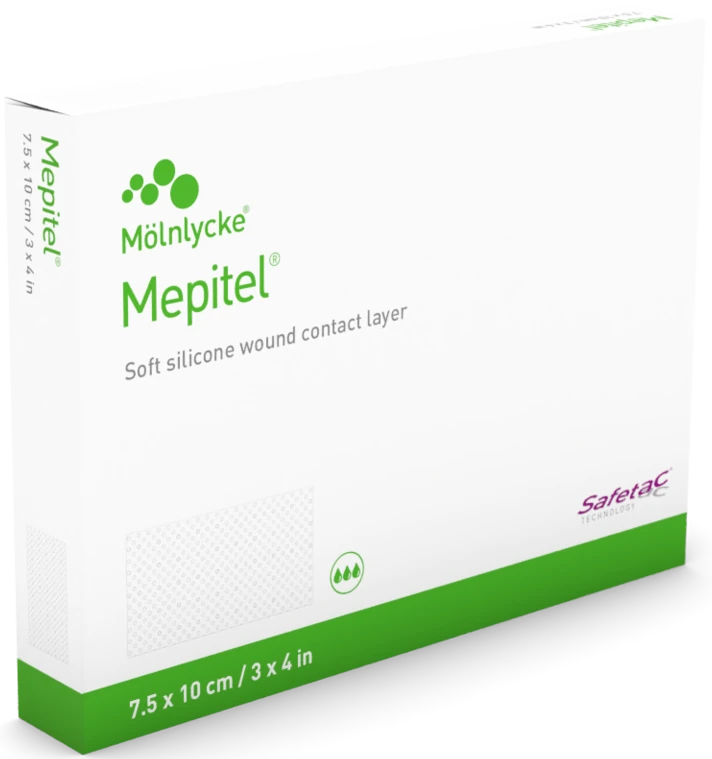
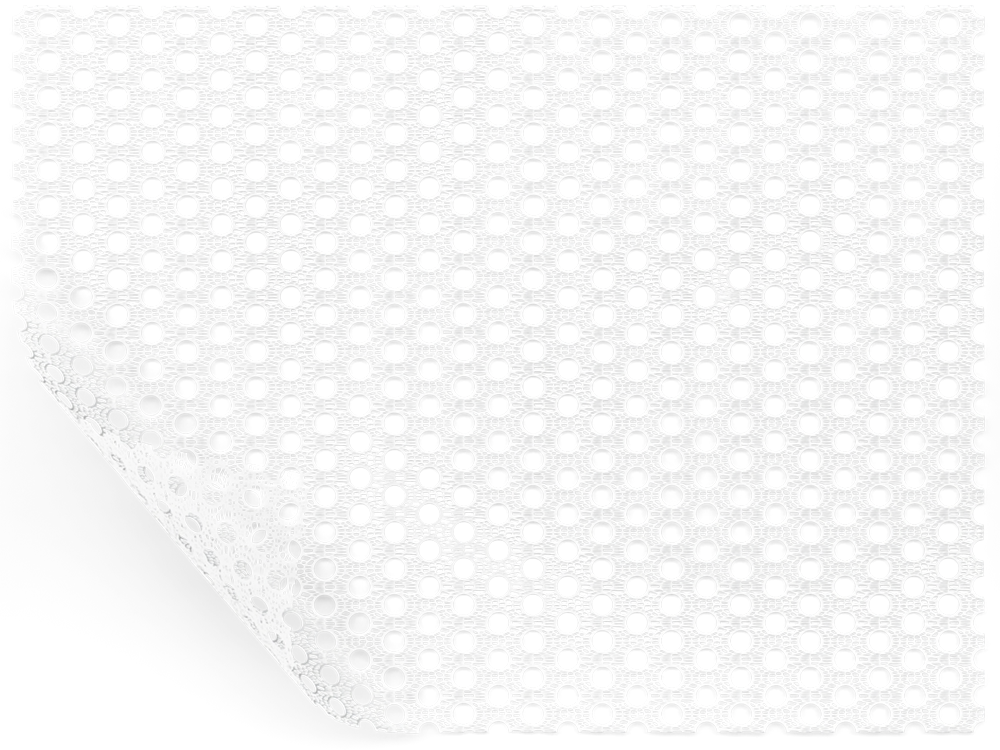
Foto: Mölnlycke
Reference
- 2010 Market view analysis, MHC
- Gotschall C.S. et al. Prospective, randomized study if the efficacy of Mepitel on children with partial-thickness scalds. Journal of Burn Care & Rehabilitation, 1998.
- Barrett S; British Journal of Nursing, 2012; 21 (21): 1271-1277.
- Dykes P.J. et al. Effect of adhesive dressings on the stratum corneum of the skin. Journal of Wound Care, 2001.
- Waring P. et al. An evaluation of the skin stripping of wound dressing adhesives. Journal of Wound Care, 2011.
- White R. et al. Evidence for atraumatic soft silicone wound dressing use. Wounds UK, 2005.
- Wiberg A.B. et al. Preventing maceration with a soft silicone dressing: in-vitro evaluations. Poster presented at the 3rd Congress of the WUWHS, Toronto, Canada, 2008.
- Meaume S. et al. A study to compare a new self adherent soft silicone dressing with a self adherent polymer dressing in stage II pressure ulcers. Ostomy Wound Management, 2003.
- Upton D. et al. The Impact of Atraumatic Vs Conventional Dressings on Pain and Stress in Patients with Chronic Wounds. Submitted and approved for publication, Journal of Wound Care, 2012.
- White R. A multinational survey of the assessment of pain when removing dressings. Wounds UK, 2008.
- Burgmann P et al. Burns 1998; 24(7):609-12.
- Dahlstrom KK. Scand J Plast Reconstr Hand Surg 1995:29(4): 325-7.
- Patton et al, An open, prospective randomized pilot investigation evaluating pain with the use of a soft silicone wound contact layer, Mepitel® One, vs. Bridal Veil and staples used on split thickness skin grafts as a primary dressing, Journal of Burns and Research, (Nov) 2013.
- Gee Kee EL, et al. Randomized controlled trial of three burns dressings for partial thickness burns in children. Burns. 2015;41(5):946-955
- Brölmann F , et al. Randomized clinical trial of donor‐site wound dressings after split‐skin grafting. British Journal of Surgery, 2013.
- Dahlstrøm KK. A new silicone rubber dressing used as a temporary dressing before delayed split skin grafting. A prospective randomised study. Scand J of Plast Reconstr Surg Hand Surg. 1995;29(4):325-327.
- Platt AJ et al. A comparative study of silicone net dressing and paraffin gauze dressing in skin-grafted sites. Burns, 1996.
- O’Donovan DA et al. The role of Mepitel silicone net dressings in the management of fingertip injuries in children. Journal of Hand Surg,1999.
- Terrill P.J. A comparison of three primary non-adherent dressings applied to hand surgery wounds. J Wound Care, 2000.
- Eid R. et al. SIMP 01 – A prospective, open, non-controlled proof-of-concept investigation to evaluate the function of a new silicone cover film and an on-top suction device to be used in a NPWT system in the treatment of acute and chronic wounds. Mölnlycke Clinical Investigation Report, 2011.
- Brölmann F , et al. Randomized clinical trial of donor‐site wound dressings after split‐skin grafting. British Journal of Surgery, 2013.
- Adamietz, I. A. et.al. Effect of Self-Adhesive, Silicone-Coated Polyamide Net Dressing on Irradiated Human Skin. Radiation Oncology Investigations, 1995.
- Köhler S. et al. Negative pressure dressing assisted healing in pediatric burn patients. Journal of Pediatric Surgery, 2014.
- Adamietz, I. A. et.al. Effect of Self-Adhesive, Silicone-Coated Polyamide Net Dressing on Irradiated Human Skin. Radiation Oncology Investigations, 1995.
- Gorell ES, Leung TH, Khuu P, Lane AT.Purified type I collagen wound matrix improves chronic wound healing in patients with recessive dystrophic epidermolysis bullosa. Pediatric Dermatology. 2015;32(2):220-5.
- Mölnlycke Health Care. Data on file.